About

About the Center

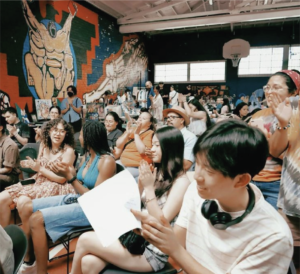
The Washington Neighborhood Center is a Historic Chicano Cultural Center with over 70 years serving Indigenous, Chicano and POC youth and community members based on the values of self determination, community empowerment and cultural revitalization. The Center has provided residents of the Alkali Flat and Washington neighborhoods a wide complement of programs and services for over 70 years in order to achieve land ownership, workers’ rights, and educational and political equity.

Offering programs in the arts, education, recreational activities, health, culture, and an overall emphasis on the development of youth, the Center and its programs have served as a refuge for many who reside in historically marginalized communities.

Today, the center is working in growing and expanding its current programming.

Our Mission

Our mission is to provide a safe, positive, inter-generational environment for children, young adults and artists. We provide programming and resources to support holistic development, with emphasis on developing a healthy mind, body, and spirit.

Big news! We’re expanding.

Big news!
We’re expanding.

From 2024 – 2025, the Center will be undergoing major construction to fully restore the building for a host of new wellness, education, and community facilities.

Board & Leadership

Our board has extensive experience in various fields, including accounting, grant writing and management, business development, non-profit and affordable development, rehabilitation and acquisitions, marketing, fundraising, education, and community relations.

Tona Miranda is an Indigenous woman from the Yaqui, Blackfeet, Otomi and Chichimeca Tribal Nations. She is a proud community member of North Sacramento. She’s an Indigenous community-engaged scholar that gains her inspiration from her ancestral foundation and immense love for her communities.

In her previous work, she was the Associate Director for the Native American Resource Center at American River College, where she and her team conducted research on the disproportionate impact on Native American students. Tona also works in Indigenous Philanthropy, connecting Indigenous nations globally to philanthropic partnerships and has assisted with bringing in $200 million dollars of prevention funding for communities of color throughout California. Tona has committed her life to empowering youth, assisting her community to dismantle the school to prison pipeline and creating Indigenous focused restorative justice programs.

She has created the Tribal Department at Youth Forward, which will focus on the impact cannabis has on tribal communities statewide and youth empowerment locally and for all tribal nations. She currently serves as the Manager of Tribal Programs and Advocacy at Youth Forward.

Liz is a CPA with over a decade of experience in accounting and finance, specializing in areas including nonprofit accounting, budgeting, cost allowability determination, and financial reporting.

If you have any additional questions finance related, please email our treasurer Liz Ku at finance.wnc1@gmail.com.

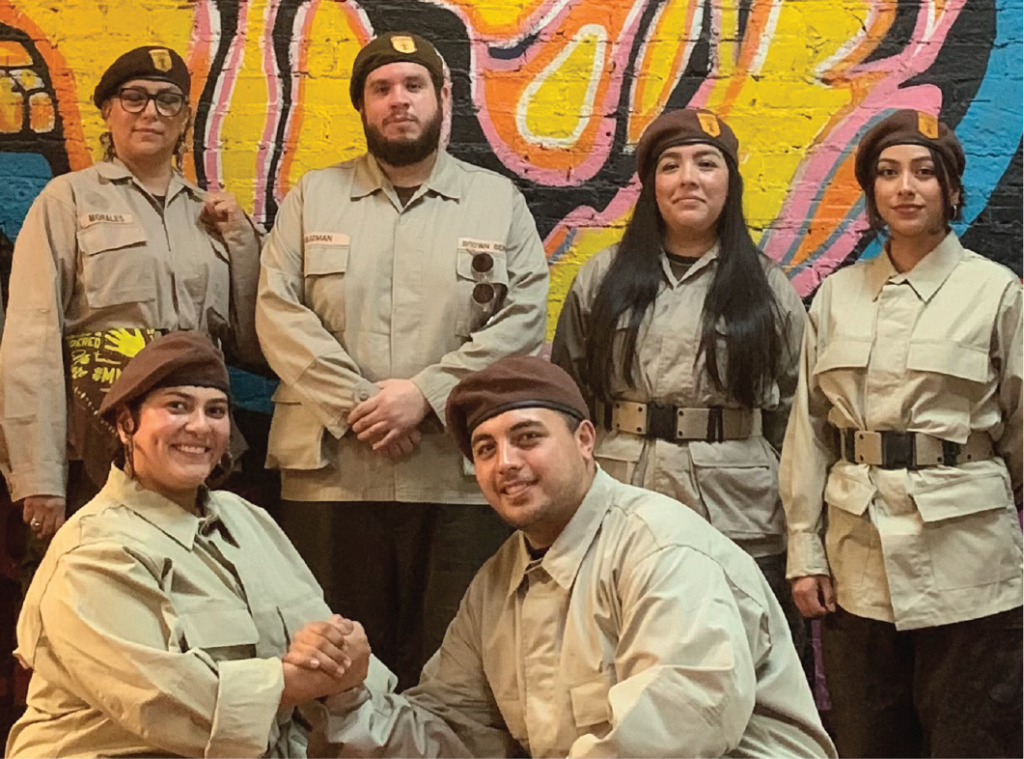
Natalia Itzali Serrato of Sacramento, California is a danzante with Grupo Telpochkalli, a Brown Beret with the National Brown Berets, and a scholar currently studying Ethnic Studies at CSU Sacramento.

Citlalin Rodriguez is a wife and mother of 4, who has been a part of the Sacramento Chicano/Indigenous arts community most of her life. Raised by activist/artist parents, she grew up attending shows, ceremonies, events and gatherings at the La Raza Bookstore/Galeria Posada (now the Latino Center of Arts and Culture), Southside Park and the Washington Neighborhood Center (WNC). She has been teaching Aztec Dance in Sacramento for 20 years this month. She has been dancing and creating dance regalia and related items even longer. She is committed to providing programming at the WNC for and around the youth, community, Dia de los Muertos (Day of the Dead), Aztec Dance and crafting and creating. Ms. Rodriguez graduated with a degree in Child Development from Sacramento State University in 2005 and has worked for the state of California for the last 18 years. She currently manages a procurement team, ensuring that state funds are spent appropriately and that all applicable laws, guidelines and policies are strictly followed.

Steven Payan began his community organizing journey in 2005 as a student leader at Woodland Community College under MEChA.. While a student organizer, he found his voice in the labor movement, serving as a student representative on the board of the Labor Council for Latin-American Advancement, Sacramento Chapter (AFL-CIO). In collaboration, he played a crucial role in fighting for the creation of an Ethnic Studies Program, overcoming adversity from district leadership. This experience inspired new motivation and dedication to community building, showcasing Steven’s commitment to higher education and social justice.

Volunteering with the Center since 2008, Steven has actively participated in various events, including conferences, art exhibits, speaking engagements, musical performances, and multicultural events. His multifaceted involvement reflects a deep commitment to inclusivity and community empowerment, showcasing his dedication to curating a vibrant and inclusive space. This would soon lead to him founding the Brown Berets de SacrAtlan and local Sacramento Poor People’s Campaign where many of the meetings happened in the Center.

Currently, Steven is a caregiver and union member leader in the SEIU Local 2015, where he is also a delegate for the Central Labor Council, actively advocating for better wages and working conditions. His commitment to social justice extends to his role within the union, where he passionately works to address the needs and concerns of his fellow workers.

As a local artist, emcee and chapter head of the Sacramento Hip-Hop Congress, Steven utilizes their creative platform to promote cultural enrichment of the culture. Dedication to creating positive change and fostering community empowerment.

The Center is now accepting new board members. Applicants may send their resumes to: emailthecenter@gmail.com

Volunteer at the Center!

Share your WNC story with us.

For the past 70+ years, the Washington Neighborhood Center has been a hub for our community. Help us document the Center’s rich history by sharing your experiences!

Do you have a story about the Center you’d like to share? We’d love to hear from you. We’ll post your submission here, in the “WNC Stories” section.

Submit your WNC story below. It could be a memory or an experience you had at the Center, a piece of the Center’s history, or a way the Center has impacted you.

Name

WNC Stories

The Center has provided basketball programs, dancing classes, Barrio Arts programs, English classes, immigration clinics, screen printing classes, photography, pottery classes… many classes just sprang up from community needs. Between the Center and the [Raza] Bookstore, the [Washington Neighborhood Center] was one of the central bases for a lot of the Chicano movement in the 60’s, 70’s and 80’s.
– Citlalin, Josie, Tona, Steven and Natalia
Legacy Board Members
The Center was the headquarters of the Brown Berets back in the 60’s, and they led the free breakfast program. Later, Food Not Bombs used the Center’s kitchen as a base of operations throughout the 80’s. Cesar Chavez screen printed here, and farm workers would march in from Delano and sleep at the Center. The Center’s boxing program was the first to accept female boxers, which was groundbreaking in the 90’s. The Zapatistas solidarity coalition also organized at the center, and led school supply drives to send over to the Zapatistas.
– Citlalin, Josie, Tona, Steven and Natalia
Legacy Board Members